 Glens Falls Chronicle Serving the Glens Falls/Lake George region; Warren, Washington and northern Saratoga counties since 1980

By Cathy DeDe, Chronicle Managing Editor
The Glens Falls catheter manufacturer that launched the region’s medical device industry will mark its 85th anniversary on November 19.
In 1939 Norman Jeckel co-founded USCI — the United States Catheter and Instrument Corporation. It began operating in 1941 with 35 employees in the brick building on Warren Street in Glens Falls where Native Textiles later operated.
CR Bard bought USCI in 1966. Bard in turn was purchased in 2017 by Becton-Dickinson — BD.
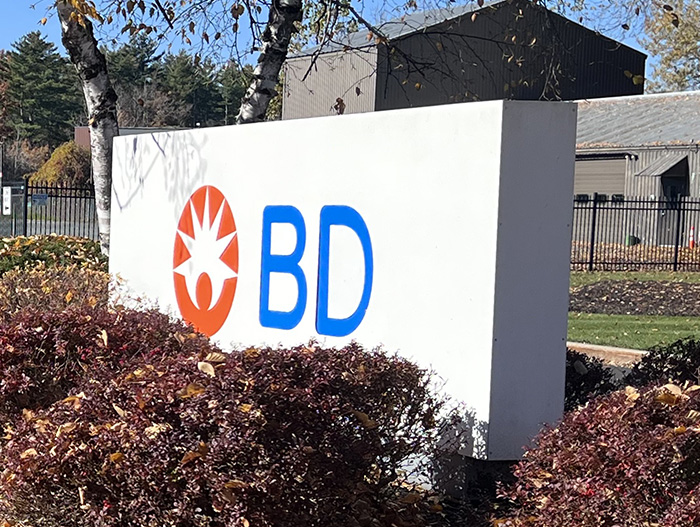
Through it all, the Glens Falls operation, which employs approximately 550 people, has made catheters — some going back to the company’s beginning, others increasingly complex and cutting edge.
The Bay Road campus south of Quaker Road is deceptively vast — 13 buildings on 15 acres on the Glens Falls-Queensbury border. The Warren County Bike Trail cuts right through it.
“A lot of people go by this building every day, and they’re not really sure what we do in here. We save lives. That’s what we do,” says Pam Welch, Senior Quality Engineer Specialist.
In her 23rd year at the plant, Mrs. Welch is also keeper of the local company history.
“The oral history that was passed down to me from our folks who have retired is that Norm Jeckel started the company in his garage.
“He had traveled extensively and saw that there was a need for catheters and especially woven catheters, and he brought that technology here. And now here we are 85 years later.”
Many BD/Bard employees spend whole careers at the plant, and it’s helped give rise to other local medical device makers. Dave Sheridan, a USCI co-founder, went on to create three separate companies that thrived in Argyle. Phil Morse left Bard to launch NAMIC, another major success. Angiodynamics and Medline still also manufacture locally.
Then there are “all the sub suppliers and everything that came out of it.”
“There’s a really strong knowledge base here on medical devices. That’s unique,” says interim plant manager Bob Kelly. “There’s definitely other hubs in the United States for medical device manufacturing, but this is one of them.”
A 2006 graduate of Queensbury High School, Mr. Kelly earned his engineering degree at Fairfield University in Connec-ticut. He says he landed at General Electric in Fort Edward not long before it shut down.
“I was planning on moving to Clearwater,” with GE. “But my family’s from here, my wife’s family’s from here. We love it here. The quality of life’s amazing” — so he switched to CR Bard, now BD, in 2019, moving into operations on the site leadership team.
“The vast majority of what we make here, we are the sole manufacturer of it,” says Mr. Kelly. “We’re unique in what we do here, the complexity and the breadth of what we make.” And he notes they’re rare in being largely “hands-on, as opposed to machine driven.”
“Most sites specialize in a couple things. Very few are making as many as we are,” Mr. Kelly said. “We have about 20 product lines. Some are components that go to sister BD sites in Mexico, in Ireland, Germany and other sites.
“But we also make a whole bunch of end-use devices that are labeled and going to distribution right from this site.
“The majority of our products are distributed throughout the world.”
What makes Glens Falls competitive
“Being adaptable to change is the number one thing” that makes the Glens Falls plant competitive, Mr. Kelly says.
“We’ve been willing to bring in new technologies…A lot of our product lines were acquisitions or mergers.
“We have several from 2010-forward,” when Bard purchased, for example, Loma Vista Medical, a California startup that created two related catheter lines, True and True Flow.” The manufacturing was moved here. “That’s a really great success story. It’s a really difficult product to make, high margin, great product,” Mr. Kelly said.
It’s used in TAVI (Transcatheter Aortic Valve Implantation), a minimally invasive procedure used to treat severe aortic stenosis — a narrowed, stiff aortic valve that restricts blood flow from the heart
“It used to be done almost exclusively with open heart surgery, which is very invasive: Cracking ribs open, long recovery, really tough for the patient.”
Mr. Kelly said in about 2010 it started being done through a catheter procedure.
“They would go in with a new valve on a balloon, which would go into the existing valve, and the balloon would open and leave it behind.
“Some patients are home the next day instead of in a rehab for months. These balloons aren’t used to deploy those new valves, but they’re used to prep that valve surface before the new valve comes in.”
Another product is Lutonix, a drug-coated catheter pioneered by a Minnesota company. After Bard bought it, “we transferred all the manufacturing here. That was a huge thing for Glens Falls back in the 2012 to 2019 time-frame.”
Mrs. Welch said Lutonix is a paclitaxel-coated balloon catheter treated with a proprietary drug mix that permanently keeps the blood vessel from re-occluding.
“Instead of having a metal implant left behind in your body,” she said, “you have the procedure, you leave the same day. In most cases, you’re talking about a half an hour procedure in a cath lab versus having a permanent implant in your body. That’s ground-breaking stuff.”
Mrs. Welch said, “We can barely keep up with the volume that the world wants of this product, and we have iterated it in so many different ways, lengths of catheters, lengths of balloons, balloons that will do this and reach this area of the body to treat different forms of peripheral arterial disease.
“We are keeping a ton of workers really busy here in Glens Falls.”
Mr. Kelly says, “We’re constantly looking to see what new things we can bring in, what we can make better than other people. Changing what we make is the key to success.”
An advantage he cites: “Just the skill set in general of the team that works here, a huge focus on continuous improvement. ‘BD Excellence is our operating system,’ is the theme.”
Mrs. Welch says, “What we are particularly skilled at is bringing in difficult products that maybe haven’t worked so well at other plants, or were just launched.”
Mr. Kelly, whose title besides interim plant manager is Senior Manufacturing Area Leader, says, “We want things that are high skill, difficult, complex things that our team specializes in.”
He says the plant is “essentially doing industrial and value engineering: Figure industrial and value engineering: Figure out how to make something better, faster, how to make materials cost less, reduce your scrap.
“Just a constant focus on improving the process to make it more cost competitive. It’s a huge piece of what the engineering and operations supervisors, our quality engineers, do here.”
“We’ve constantly been looking to hire people, constantly looking to build volume. We have growth in product lines. We have new things coming.
“The message our site wants to send to our company is that we can grow. We have a workforce, we can be successful, the challenges we’ve had here are essentially keeping up [with demand], which is a great problem to have.”
Challenge of filling jobs
The Chronicle asked, are you finding enough workers?
“Direct labor — manufacturing workers — is definitely a challenge here,” Mr. Kelly said. “The [health care] purpose is my number-one selling point….You’re making products that save people’s lives.”
“As far as the actual manufacturing team, there’s really competitive pay” — starting at $20 an hour, he says, plus shift differentials, “really good full-time benefits, unique shifts including from 5 a.m. to 1 p.m., which a lot of people love. We have a couple key operations that run around the clock, but the vast majority is off on the weekends.”
For hourly workers “we require a high school diploma, and there’s definitely the need to read, and basic math skills are super important for traceability of components. There’s a lot of counting and arithmetic and making sure that you’re accounting for what you used in your production.”
“We have a lot of kind of complex, high-skilled, high-dexterity assembly work,” some under microscopes, in a clean room type environment — “very clean, very safe, not a heavy industry environment where you’re loud and hot,” said Mr. Kelly,
Mrs. Welch comments, “It’s really good to see the role that women have here. As I look through the early years of the company, you can see that Norm was specifically hiring women,” in part for handwork skills, she believes.
Mr. Kelly adds, “As far as the technical work, that’s all on-the-job training that we do here.”
He says of working at Bard, “There are a lot of little perks. We have a birthday meeting every month. We give everybody a piece of cake, breakfast and a gift.
“We have an ice cream truck in the summer that comes every other Thursday. Just fun small things that make the culture nice here to work for.
“We do a ton of good stuff in the community. We always have, and we don’t do a great job, in my opinion, of taking credit for it. We’re constantly involved with Big Brothers-Big Sisters, Habitat for Humanity, all the great local charities. We were just handing out candy at Boo2You. But what I hear still is, who’s BD, even though its been almost 10 years since CR Bard.”
As for the bike trail running right through the plant’s campus, Mr. Kelly calls it “kind of nice” as well as a bit of a security issue. But he also notes some employees bike to work, walk on the trail during breaks and it’s a short walk in either direction to Cooper’s Cave or Sprinkles for ice cream.
Queensbury native Bob Kelly joined BD in 2019, is interim plant manager
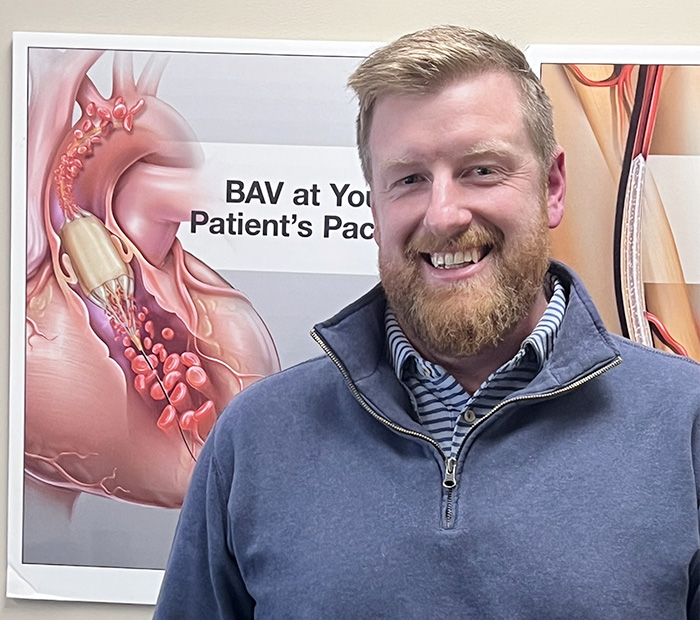
Bob Kelly graduated from Queensbury High School in 2006 and earned an engineering degree at Fairfield University. At Bard/BD since 2019, he’s a member of the site leadership team and currently interim plant manager.
“The vast majority of what we make here, we are the sole manufacturer of it. We’re constantly looking to see what new things we can bring in, what we can make better than other people.”
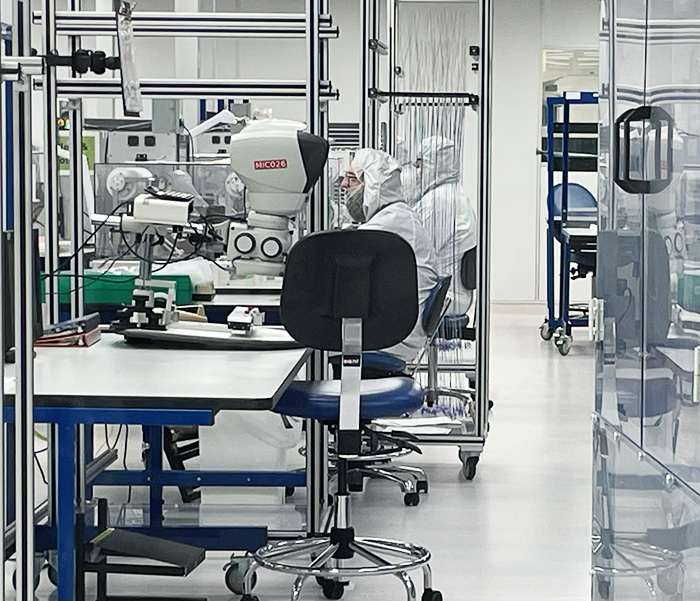
Rare peak into BD’s ‘clean room’
The “clean room,” where, Pam Welch said, “we’re making that revolutionary drug coated product,” Lutonix. “You’ll see that the folks working in there are actually in a full bunny suit with gloves and everything. The controls inside there are much greater than anywhere else in the facility. This is where we’re actually applying that drug coating, the paclitaxel….So what happens is they’re putting the balloon catheter on that piece of equipment. It gets inflated and rotated, and the drug will be spray applied to the surface of the balloon, then it’s going to get hung and dried.” The drug, applied to the formerly clogged arteries, prevents them from reoccluding. “This is the only place that this is done since we launched this product. There are other companies that have come out with their own, but we were first. We’re very proud of this space. This space will keep jobs in Glens Falls for a long time.”
Pam Welch, engineer with 23 years here
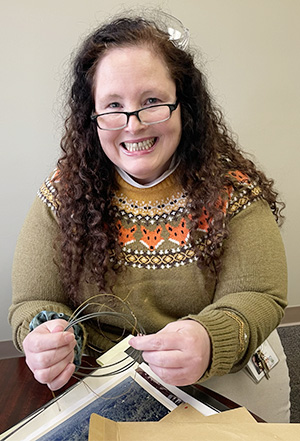
Her title at BD is Senior Quality Engineer Specialist, and she has been with the company 23 years. She considers herself “kind of a teenager,” compared to many long-timers. Mrs. Welch also acts as the plant historian.
“My mother actually worked [in Argyle] for Dave Sheridan, who founded the company with Norm Jeckel….
“These were two very brilliant men, and all these decades later, we have this legacy.”
Copyright © 2026 Lone Oak Publishing Co., Inc. All Rights Reserve